
Flat Roofs That Handle Temperature Swings
TPO Roofing nationwide for commercial and industrial buildings with low-slope roof systems exposed to extreme seasonal weather
Highmark Contracting installs TPO roofing systems nationwide using heat-welded seams that remain flexible through those swings without cracking or splitting. Property managers notice fewer leak calls and lower cooling costs once a reflective TPO membrane replaces an aging built-up roof.
TPO stands for thermoplastic polyolefin, a single-ply membrane that reflects solar heat rather than absorbing it. Installation involves mechanically fastening or fully adhering the membrane to the roof deck, then heat-welding every seam to create a watertight bond stronger than the sheet itself. That welded seam construction prevents the peel-back and wind uplift common in glued or taped systems, which matters during spring windstorms that routinely exceed fifty miles per hour across the plains.
Schedule a roof evaluation to identify whether your current system can support a recover or requires full tear-off.
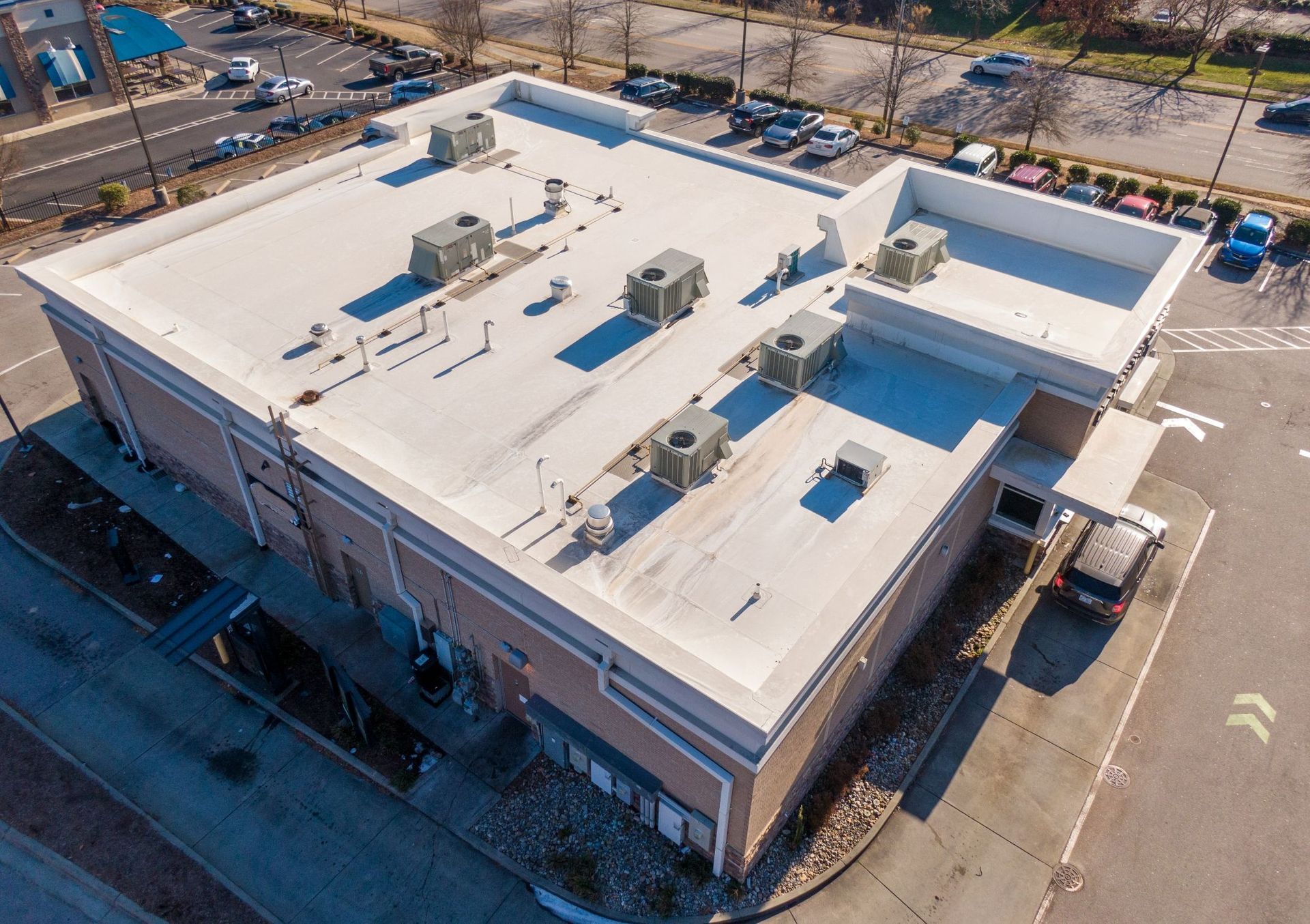
Why TPO Membranes Outlast Other Single-Ply Options
TPO membranes resist ultraviolet degradation without requiring a protective coating, and the material remains pliable at temperatures well below zero. Proper installation includes insulation boards that meet or exceed code requirements for your building type, then the membrane is rolled out in wide sheets to minimize seam count. Each seam is welded using a hot-air gun that fuses the layers into a single piece, and quality control includes probe testing every weld before the roof is signed off.
After installation, you'll see a bright white or light gray surface that stays cooler to the touch even during July afternoons, which reduces the load on your HVAC system. Water sheets off the roof during thunderstorms rather than pooling in low spots, and snow slides more readily in spring compared to rough surfaces that hold drifts. The membrane itself shows no cracking or chalking for years, and minor punctures from hail or debris can be heat-welded on site without removing large sections.
TPO systems work for new construction and full replacements, and they're compatible with most roof slopes above a quarter-inch per foot. Highmark Contracting coordinates material delivery and crew scheduling to minimize disruption, and manufacturer warranties typically cover the membrane for fifteen to thirty years depending on thickness and installation method. Projects for commercial warehouses, agricultural buildings, multifamily housing, and institutional facilities all follow the same core process, adjusted for roof size and access constraints.
What Building Owners Ask About TPO Installation
Property owners in Williston often wonder whether a TPO system will perform through the full range of conditions their building faces. These answers address the most common concerns before starting a roofing project.
What thickness should I choose for a commercial roof?
Most commercial applications use sixty-mil TPO, which balances puncture resistance with flexibility during temperature changes, though high-traffic roofs with rooftop equipment may benefit from eighty-mil sheets.
How does TPO handle hail compared to other flat roof materials?
TPO membranes absorb impact without tearing in most hail events, and the flexible surface allows small indentations to recover rather than crack, which is why insurance carriers in hail-prone regions often approve TPO without surcharges.
When is the best time to schedule a low-slope roof replacement in this climate?
Late spring through early fall provides the most consistent installation conditions, since membrane adhesives and welding equipment perform best above forty degrees, though emergency repairs happen year-round with heated enclosures when necessary.
What preparation work happens before the new membrane goes down?
Crews remove the existing roof down to the deck if it's saturated or damaged, then install new insulation boards and a cover board, ensuring the surface is smooth and dry before rolling out the TPO.
How long does a TPO roof last on an industrial building?
Properly installed TPO systems routinely exceed twenty years in service, with some original installations from the late 1990s still performing without leaks, assuming regular inspections catch minor issues before they spread.
Highmark Contracting works with building owners across commercial, industrial, hospitality, agricultural, institutional, multifamily, government, and residential properties to match roofing systems to building use and budget. Request a project estimate that includes material specifications, installation timeline, and warranty details specific to your property.